Energy and Climate Change
Energy efficient appliances usage: > 75%
Total smart building area: 339837 m2

Electricity usage per year: 15685506 kilo watt hour
The total electricity usage divided by total campus population: 463.20 kWh
Total carbon footprint (CO2 emission in the last 12 months) : 13971 metric tons
Total carbon footprint ratio over total campus population: 0.44
Renewable energy source: Solar Power (2385.73 kWh)
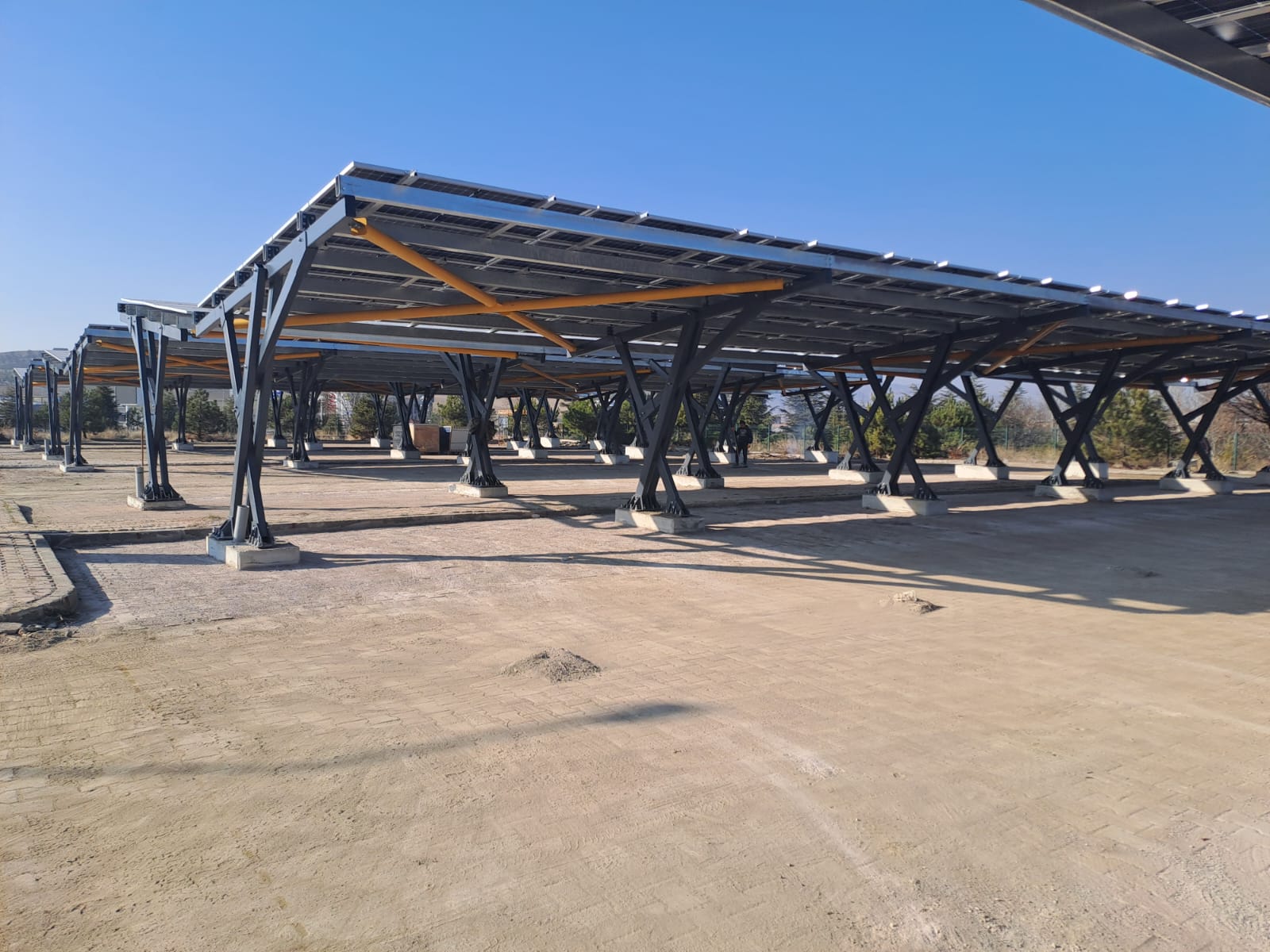
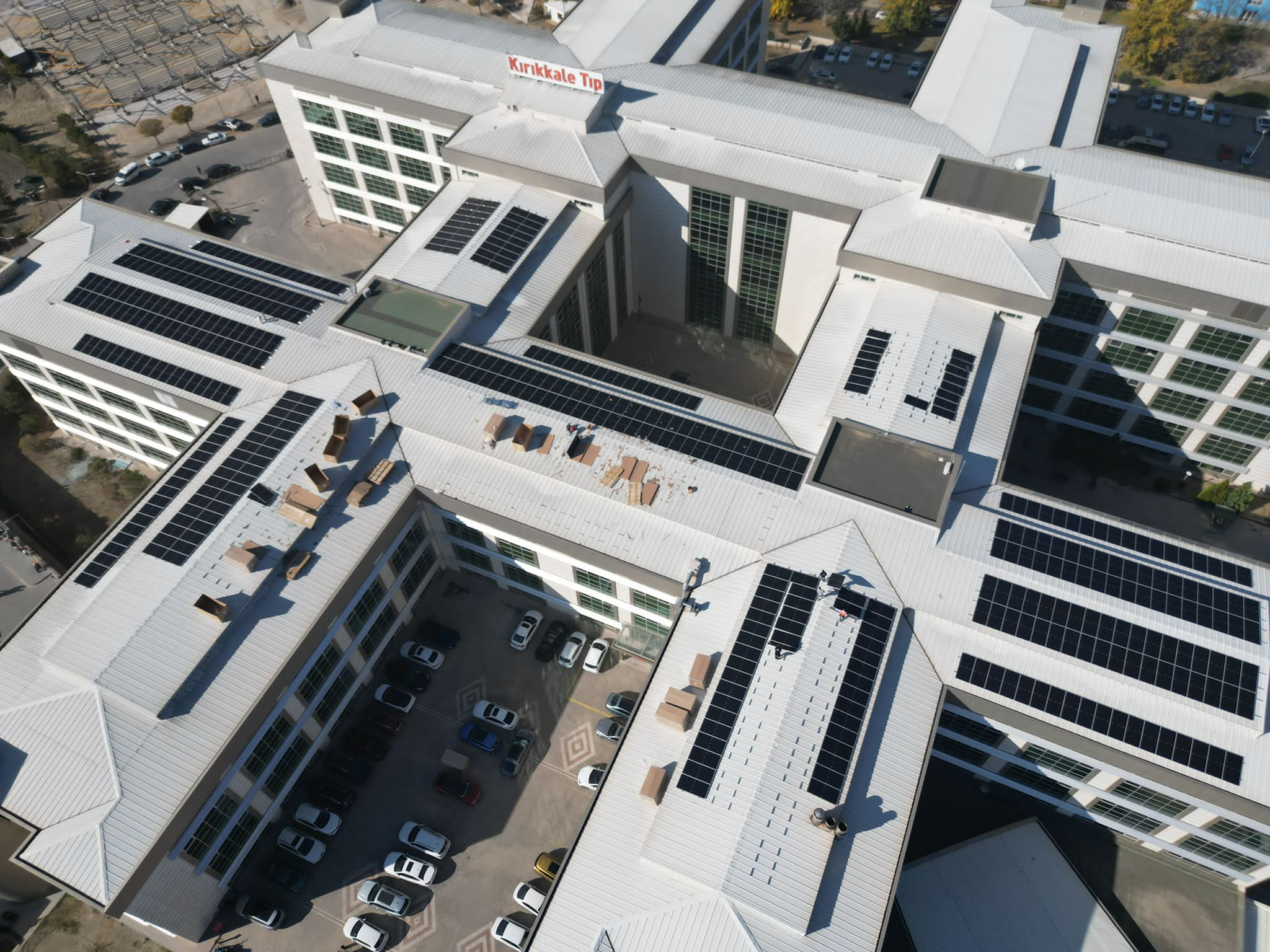
A solar water heating system is in place on campus to harness solar energy for domestic hot water. Additionally, as part of the KABEV (Energy Efficiency in Public Buildings) World Bank project implemented by the Ministry of Environment, Urbanization, and Climate Change, a total of 1,309 kWp of solar power plants (SPP) have been installed at the Faculty of Medicine and Hospital Building, consisting of one parking lot-type and one rooftop-type system.
A total of 1,455 kWp of solar power panels have been installed at the Faculty of Health Sciences and the Physical Therapy and Rehabilitation Hospital Building, consisting of one carport and one rooftop system. Under the KABEV project, 10,300 lighting lumineries will be replaced with energy-efficient LED luminaries. This project will reduce electricity consumption. Additionally, existing lighting luminaries that have reached the end of their economic lifespan are being replaced with LED.

The University has initiatives related to energy and climate including the Zero Waste Unit, annual tree planting campaigns, and the Kırıkkale-2053 Search Conference, which addressed sustainability strategies in the fields of water and energy. Energy managers have been appointed for the buildings at the university’s Main Campus, Faculty of Medicine, and Physical Therapy and Rehabilitation Hospital. An Energy Management Unit has been established. Training has been conducted for the implementation of the TS EN ISO 50001 Energy Management System. Furthermore, the establishment of research centers and departments demonstrates institutional commitment to environmental research and policy development.
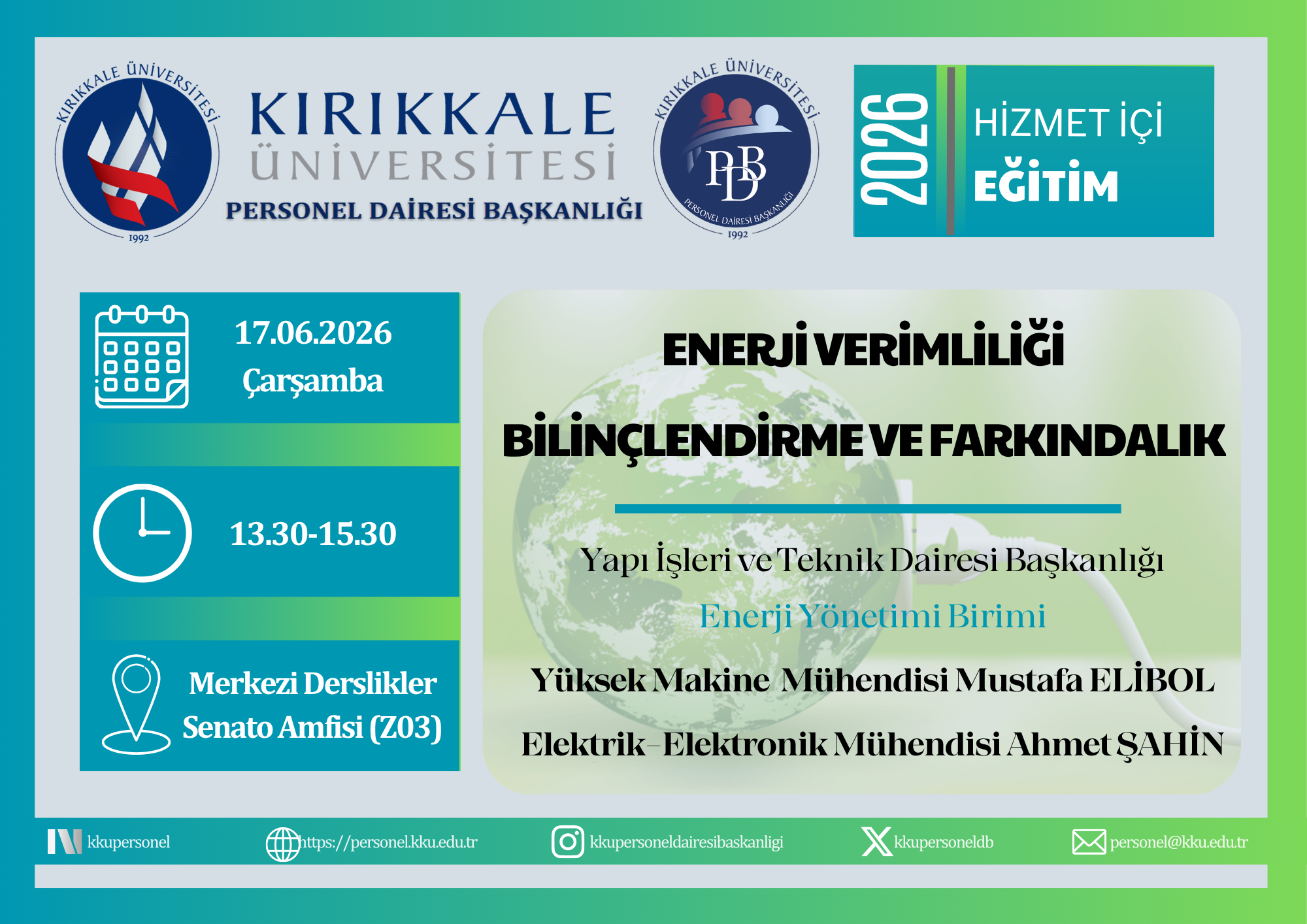
Within the scope of Law No. 5627 on Energy Efficiency and TS EN ISO 50001 Energy Management System, the “Energy Efficiency Awareness and Training Program” was conducted to enhance staff’s awareness of energy saving. The training covered lighting and HVAC (heating, ventilation, and air conditioning) optimization in buildings within the framework of a sustainability vision, the importance of insulation systems, and daily energy-saving measures that can be implemented in office environments. It also presented data demonstrating the extent to which individual behavioral changes contribute to reducing institutional energy costs and minimizing environmental impact. (https://enerji.kku.edu.tr/Idari/Haber/Index/7692)